
Free printable · Ages 3–12 · 12 pages
Smart, Not Scared: teach stranger safety without scaring your child
Five simple rules, the exact words kids can use, practice games and a printable family safety plan. Teach it like a fire drill: calm, simple and practised until it feels natural. Free 12-page PDF.
Enter your email above and the download button appears here.
Download Smart, Not Scared (PDF)
What's inside
Inside the guide
- What the kids in our reel did right
- The 5 safety rules kids can remember
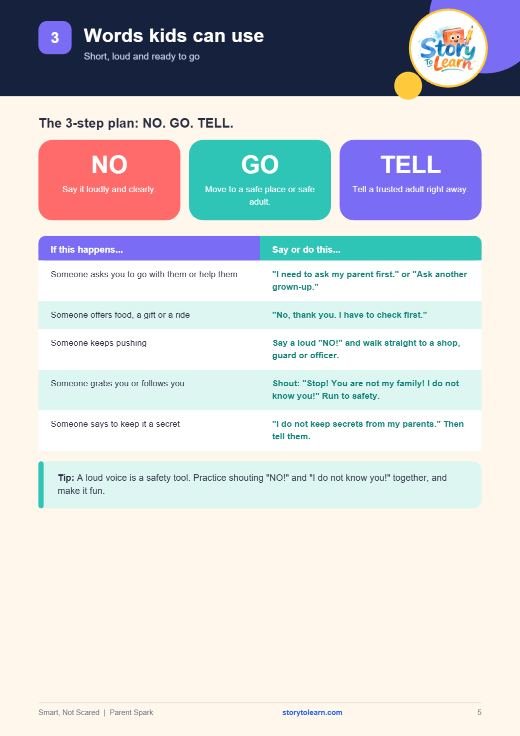
- Words kids can use: No. Go. Tell.
- Safe adults and safe places
- Practice at home: six “What if?” questions
- An age-by-age guide
- Online strangers too
- If your child tells you something
- A printable family safety plan
- Resources for parents
Try it today
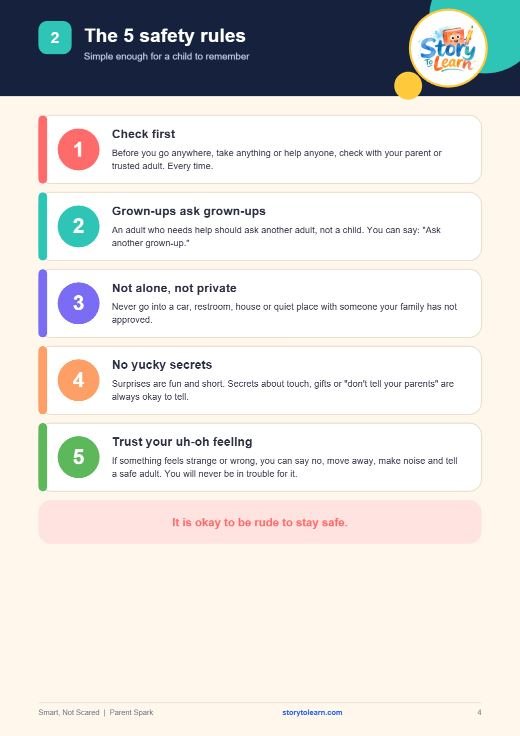
A taste of what's inside: the 5 safety rules
- 1. Check first. Before you go anywhere, take anything or help anyone, check with your parent or trusted adult. Every time.
- 2. Grown-ups ask grown-ups. An adult who needs help should ask another adult, not a child.
- 3. Not alone, not private. Never go into a car, restroom, house or quiet place with someone your family has not approved.
- 4. No yucky secrets. Surprises are fun and short. Secrets about touch, gifts or “don't tell your parents” are always okay to tell.
- 5. Trust your uh-oh feeling. If something feels wrong, you can say no, move away, make noise and tell a safe adult.
Behaviour matters more than looks, and most harm to children comes from people they already know. That is why every rule is about behaviour, secrets and checking first.
More free printables
One sign-up unlocks all five
Raising Disciplined Kids
See what's inside →Money Smart, Life Ready
See what's inside →The Pants Rule Flash Cards
See what's inside →This guide shares general safety education. Every child and family is different. If you have a concern about a child's safety, contact your local authorities or a child protection professional.